State of Decay Co-Creators Sue NetEase for $900M Over Defamation and Studio Collapse
NetEase Games faces a $900M defamation and unfair trade practices lawsuit from Prytania Media, sparking industry-wide controversy.
A $900 million legal storm has engulfed one of China's largest gaming conglomerates, as former State of Decay co-creator Jeff Strain and his wife Annie Strain wage a high‑stakes defamation and unfair trade practices lawsuit against NetEase Games. The case, rooted in the abrupt collapse of a network of independent studios, alleges that false rumors and a regulatory standoff destroyed the couple’s publishing company Prytania Media and its subsidiaries, leaving a trail of shuttered offices and tarnished reputations. Filed in a Louisiana state court in January 2025, the litigation has since ballooned into a sprawling federal dispute that, as of early 2026, remains unresolved.
The controversy traces back to mid‑2024, when Kotaku reporter Ethan Gach began investigating the closure of Crop Circle Games, a Prytania subsidiary. During a conversation with Jeff Strain, Gach referenced non‑public details about Project Vonnegut – an unannounced title in development at another subsidiary, Possibility Space. Jeff Strain asserts that this leak proved catastrophic. An unnamed funding partner, who had been in advanced discussions, allegedly “expressed low confidence” and withdrew support. Within weeks, Possibility Space was shut down, and sibling studios Fang & Claw and Dawon were set to follow. The Strains allege the leak was no accident; rather, it was the culmination of a deliberate campaign by NetEase, a 25 percent owner of Prytania Media and an investor in Crop Circle Games, to sabotage the entire portfolio.

In the lawsuit, Strain’s attorney Steven Griffith paints a vivid picture of alleged misconduct. He accuses NetEase of causing “defamatory rumours to run rife in the gaming investment community during a sensitive time in the industry,” effectively poisoning the well for all Prytania studios. The filing claims that what began as a “mutually beneficial relationship” soured when the Strains demanded NetEase confirm compliance with United States foreign investment laws. The couple’s legal team argues that the Chinese publisher “became increasingly hostile and aggressive” and tried to “silence” the founders. At the core of the tension, they assert, was a request for NetEase to “identify owners and board members that are Members of the [Chinese Communist Party] and their position within the CCP, as well as the existence of its CCP party organisation, its members, and the control it exerts over NetEase.” The Strains even allege that Activision executives “felt threatened” by NetEase during licensing negotiations in 2023.

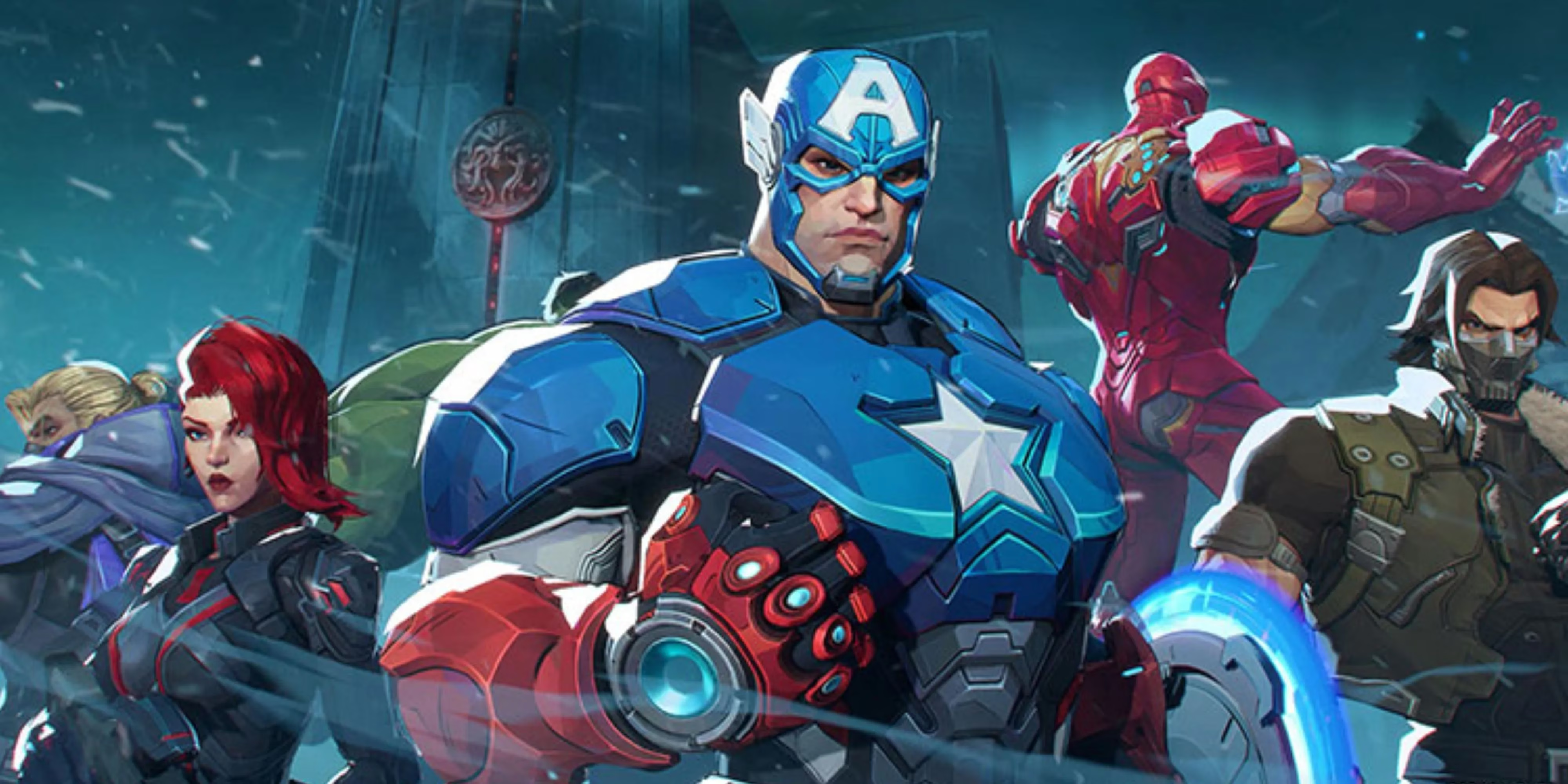
NetEase has categorically rejected every claim. In a statement issued shortly after the lawsuit became public, the company said: “The allegations by Prytania Media and its founders Annie and Jeff Strain are wholly without merit, and we emphatically deny and will vigorously defend ourselves against them. Our record as a global gaming company speaks for itself, and we remain committed to conducting business with integrity. We are confident that the legal process will vindicate our position and shed light on the real reasons behind the demise of the Strains’ studios.” The publisher, known for blockbusters such as Marvel Rivals and Naraka: Bladepoint, has not elaborated further on those “real reasons,” but industry observers note that the indie studio sector was grappling with widespread funding droughts and post‑pandemic contractions at the time.
The procedural timeline has added another layer of intrigue. After the initial filing in state court, NetEase successfully moved to transfer the case to federal court, a request granted in March 2025. Legal analysts suggest the shift could affect discovery rules and the ultimate venue for a jury trial. By the summer of 2025, the case had been assigned to a federal judge in Louisiana, and both sides began exchanging preliminary evidence. As 2026 unfolds, no settlement has materialized, and motions to dismiss remain pending. The litigation now threatens to expose sensitive internal communications about cross‑border investment compliance, foreign ownership disclosures, and the inner workings of a multinational gaming giant’s relationship with its U.S. partners.
The fallout from the studio closures has been severe. Crop Circle Games, Possibility Space, Fang & Claw, and Dawon were all either shuttered or placed on indefinite hiatus, leaving dozens of developers jobless. The Strains deny that “key employees” were let go because of the leaks, but the timeline suggests a rapid unraveling. For Jeff Strain, a veteran credited with helping create the iconic State of Decay franchise, the fight carries deep personal and professional stakes. Annie Strain, who co‑founded Prytania Media, described the experience in a separate social media post as a “nightmare of whispers and broken promises” that consumed their life’s work.
Observers note the lawsuit taps into broader anxieties about studio independence in an era of consolidation. The fear that a minority investor could allegedly weaponize rumors to dismantle a portfolio of creatives has resonated far beyond Louisiana courtrooms. While NetEase maintains its innocence, the $900 million figure – which dwarfs many historic settlements in the games industry – underscores the Strains’ belief that the damage was catastrophic and irreparable.
As the discovery process grinds on, the gaming world watches closely. At stake is not only a colossal financial judgment but also a precedent-setting examination of how far a publisher’s influence can reach. For now, Jeff and Annie Strain continue to seek justice through the courts, while NetEase prepares to “vigorously defend” its reputation. With no end in sight, the battle is sure to dominate headlines well into the second half of 2026.
Comments