Marvel Rivals' Krakoa Map: A Living, Breathing Battleground with Unsettling Implications
The Krakoa map in Marvel Rivals Season 2 masterfully integrates deep X-Men lore, transforming the living island into a compelling and unsettling participant in every match. This brilliant design choice layers the typical shooter experience with profound existential questions, as players must confront the 'cursed' reality of causing harm to the very sanctuary they fight to protect.
In the ever-evolving landscape of Marvel Rivals, the introduction of the Krakoa map in Season 2 has been more than just a thematic win; it's a deep, lore-accurate dive that fundamentally alters the player's relationship with the battlefield itself. As a living, sentient island dedicated to mutantkind, Krakoa isn't merely a stage for combat—it is a participant, a silent witness, and potentially, a victim. This raises profound questions for players: What does it mean to fight on a conscious entity? Are we heroes defending a haven, or are we reckless invaders causing it harm with every missed shot and stray explosive? The map's addition, perfectly timed with Emma Frost's debut, showcases NetEase's commitment to source material, but it also layers the typical shooter experience with a uniquely Marvel brand of existential unease.
The Lore and Significance of Krakoa
The island of Krakoa is not a random selection; it is a cornerstone of modern X-Men mythology. In Marvel Rivals lore, as in the comics, Krakoa is a sovereign nation and safe haven for mutants, born from the ancient, sentient landmass known as Okkara. Its other half, Arrakko, also exists within the game's universe as another allied sentient island. This living nature is central to its identity. Krakoa views mutants as its own, offering them the use of its remarkable Gateway system—pairs of twin flowers that function as instantaneous living portals when separated and planted.
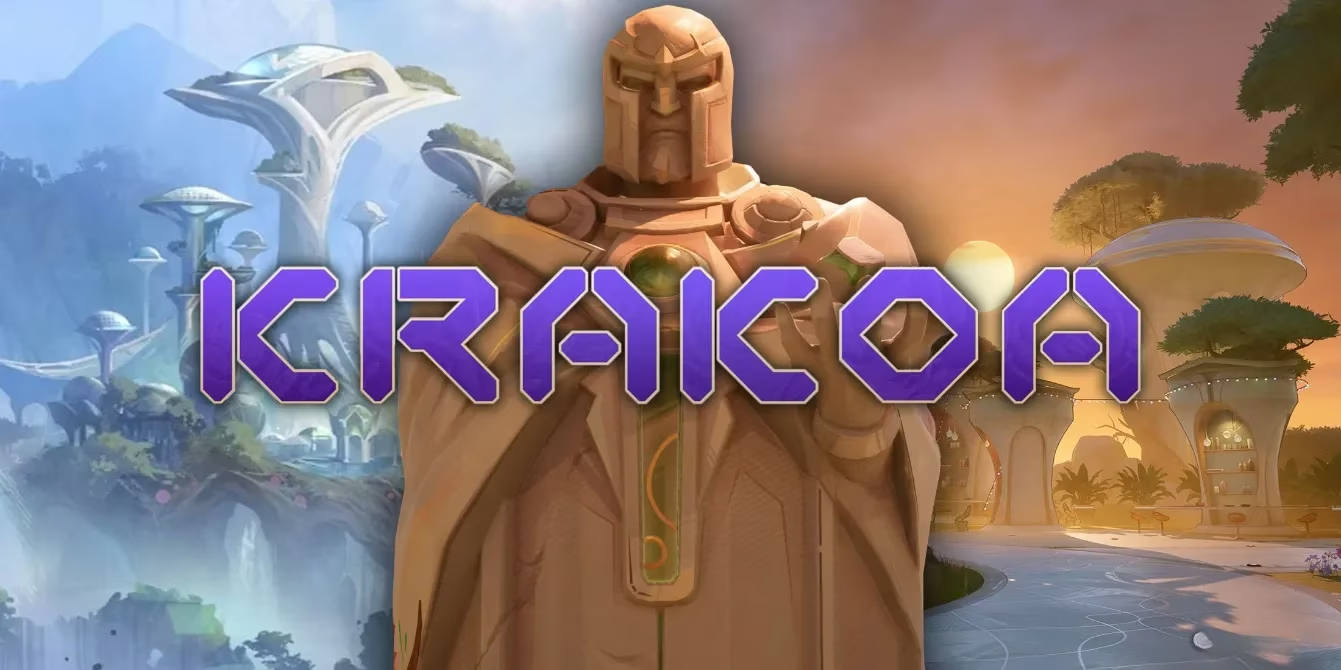
While the portal mechanic remains unconfirmed for gameplay, the flowers hold another critical role: their extract is used to produce life-saving medicines. This dual purpose—transportation and healing—highlights Krakoa's benevolent, symbiotic relationship with mutantkind. It's the site of the annual Hellfire Gala, hosted by Emma Frost and the Hellfire Trading Company, cementing its status as a cultural and political hub. The map, therefore, isn't just a location; it's a character with history, agency, and purpose.
The 'Cursed' Reality of Combat on a Living Island
Herein lies the unsettling, or "cursed," implication that the game brilliantly introduces. Krakoa is alive. Every bullet that ricochets off a rock formation, every ability that scorches the earth, and every missed headshot that hits a tree branch is, technically, an injury inflicted upon the island itself. Players are fighting a war on the body of their host. This creates a fascinating cognitive dissonance, especially when playing as mutant heroes like Storm, Magneto, or the newly added Emma Frost. These characters are ostensibly fighting to protect Krakoa, yet their very combat actions cause it harm. Are we preserving the sanctuary or desecrating it in the process?
The unease extends beyond mutants. Consider playing as Mantis or Groot:
-
Mantis: Her Flora Maiden costume description confirms that Krakoa physically responds to her presence, draping plants over her to create the outfit. She is in direct, harmonious communication with the island. Engaging in violent combat while wearing its gift feels inherently contradictory.
-
Groot: As a being composed of plant matter, Groot likely shares a profound, silent bond with Krakoa. They could probably communicate, though players will never know for sure, as Groot famously sticks to his three-word vocabulary (except for a special voiceline with Emma Frost). Fighting alongside or against him on Krakoa adds another layer of complexity to the living ecosystem of the battle.
Gameplay Implications and Future Potential
The living nature of Krakoa isn't just narrative flavor; it opens doors for innovative gameplay mechanics in future updates. With Ultron and another Krakoa map slated for Season 2.5, could we see dynamic environmental interactions based on the island's "health" or mood? A tentative list of potential features inspired by the lore includes:
| Potential Feature | Description | Lore Basis |
|---|---|---|
| Gateway Portals | Temporary, map-controlled portals that open between specific flower patches. | Krakoa's twin-flower transportation system. |
| Reactive Terrain | The island subtly shifting or groaning after sustained heavy fire in an area. | Response to injury from its living nature. |
| Healing Zones | Specific areas (like glowing flowers) that provide gradual healing over time. | Based on the life-saving medicines derived from Krakoan flora. |
Of course, not all players will be disturbed. For some, the knowledge that Krakoa is alive might be cathartic—a perfect target upon which to vent frustration after a tough match. Instead of feeling guilty about damaging the environment, they might actively enjoy the idea of battling on and against the map itself. This dichotomy is part of what makes the Krakoa addition so clever; it holds a mirror up to player psychology within the Marvel universe.
Conclusion: A Landmark Addition
By 2026, Marvel Rivals has solidified its reputation as a shooter that respects and integrates its comic book DNA. The Krakoa map is a masterclass in this approach. It transcends being a simple backdrop, becoming an integral part of the story and the emotional texture of the game. It asks players to think about the consequences of their actions in a way few competitive shooters dare. Whether it makes you uneasy, strategic, or simply more immersed, Krakoa has undeniably become one of the most important and talked-about locations in Marvel Rivals, perfectly setting the stage for future mutant arrivals and deepening the game's connection to the rich tapestry of Marvel Comics. The island lives, breathes, and feels every shot—and that changes everything.
Comments