How The Thing Proved Marvel Rivals Can Handle Hero Overlap Like a Champ
Marvel Rivals' new Vanguard The Thing smashes expectations with a disruptive backline bully playstyle, starkly different from Hulk's head-on brawling.
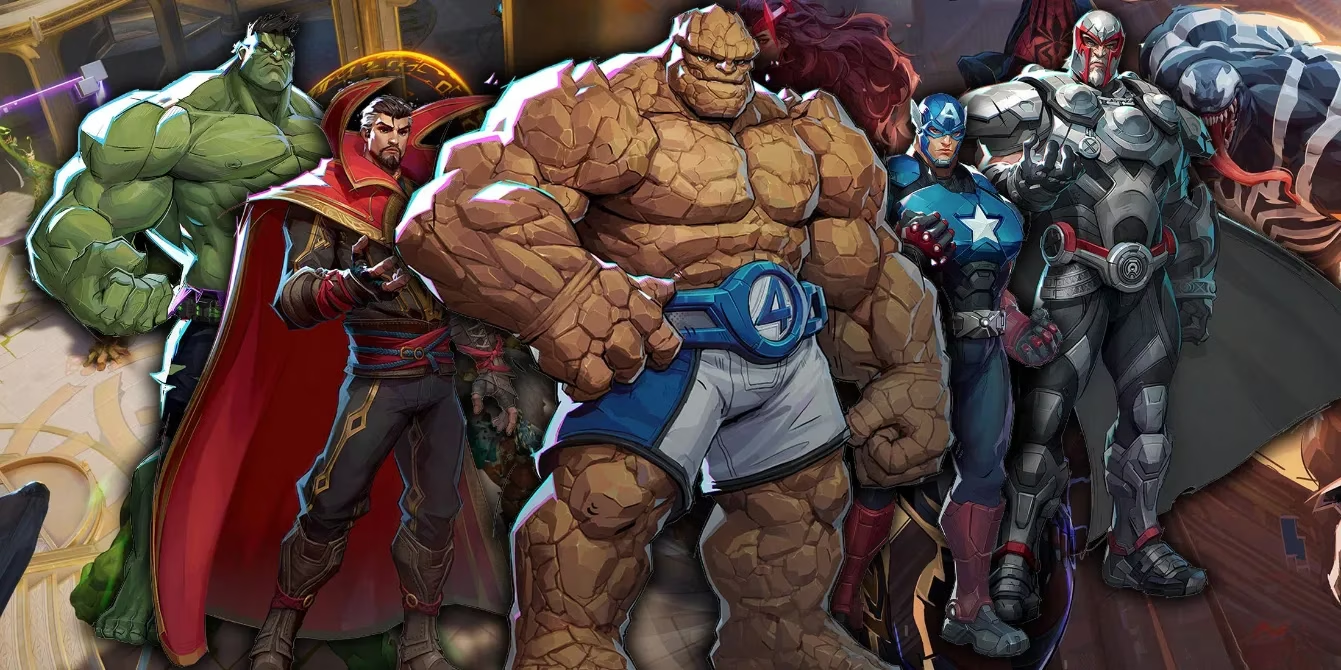
When Marvel Rivals first burst onto the scene, it did so with all the subtlety of a Hulk smash—33 playable heroes right out of the gate, no ifs, ands, or buts about it. That's a heck of a lineup for a brand-new hero shooter, and it immediately got the hype train chugging along at full steam. But even the most diehard true believers couldn't ignore the lopsided roster: the Duelist class had more heroes than you could shake a Vibranium arm at, while the Vanguard and Strategist categories looked a bit like a deserted subway car at 3 a.m. Still, the sheer variety kept players glued to their screens, theory-crafting and button-mashing through the first few weeks like there was no tomorrow.
Then, before anyone could even whisper "content drought," NetEase tossed a couple of new faces into the arena. Mr. Fantastic and the Invisible Woman arrived in early 2025, followed by the remaining members of the Fantastic Four—including ol' blue eyes himself, The Thing—by the season's midpoint. That pushed the total count to 37, and more importantly, it proved the devs weren't just resting on their laurels. But here's the rub: the moment The Thing's silhouette appeared in datamines, a collective groan of "another big punchy bruiser?" rippled across the internet. After all, Hulk was already holding down the smash-now-ask-questions-later fort. Could the game really support two hulking (pun intended) melee monsters without one feeling like a skin for the other?
Turns out, the answer is a resounding "heck yes," and it's got more flavor than a shawarma joint after an Avengers battle. NetEase didn't just slap a different coat of paint on Hulk's code and call it a day—they built The Thing as a Vanguard who plays by his own rocky rules. Sure, both heroes can soak damage and dish out melee pain, but the similarities end faster than a speedrun through a tutorial. The Thing's dash ability, for example, lets him close distance and disrupt enemy formations from angles that would make a geometry teacher weep with joy. He's not just a frontliner; he's a backline bully, a wrecker of support formations, and his Embattled Leap gives him the power to yeet himself toward an ally, handing out bonus health like candy on Halloween. This ain't your grandpappy's slow, lumbering rock-man—this Ben Grimm is surprisingly zippy.
Contrast that with Bruce Banner's greener half. Hulk's leap is a straight-line ticket to the center of the brawl, and his melee swings are designed to cleave through clusters of enemies like a hot knife through butter. Where The Thing thrives as a disruptor who flanks and harasses, Hulk is the walking definition of "come at me, bro." It's the difference between a linebacker and a wrecking ball—both will leave you flat on your back, but the method is miles apart. And let's not forget The Thing's charged Stone Haymaker, which encourages players to laser-focus on a single target rather than just flailing around. That subtle nudge toward precision over chaos gives him a rhythm all his own.
This masterclass in hero design isn't just great news for The Thing fans (and there are many, bless their rocky hearts). It's the smoking gun that proves Marvel Rivals' roster can be a whole lot broader than the naysayers ever imagined. For a while, the worry was that heroes with overlapping power sets—think super strength, claws, or regeneration—would inevitably step on each other's toes, turning the hero select screen into a bland who's-who of copycats. But The Thing's success says, "Nah, that script ain't written yet." As long as abilities are implemented with creativity and a deep understanding of what makes each character tick, the game can welcome a flood of new faces without anyone feeling redundant.
This opens up a treasure chest of possibilities, especially for the Vanguard class, which had been crying out for some love since launch. Marvel's comics are stuffed to the brim with heavy hitters who could fill the role: Colossus, Juggernaut, She-Hulk, and even more off-the-wall picks like Armor or Groot (the comic version with even weirder tricks). In a post-Thing 2026, it's easy to imagine Colossus rolling in with a kit that's all about galvanizing his team with metallic armor buffs instead of just punching things—though trust me, he'll still punch things, just in a uniquely Colossus-y way. The devs have shown they can cook, and the menu might be endless.
What's particularly clever is how this design philosophy sneaks past the usual hero-shooter pitfall of "power creep" and "bloat." By making each hero feel distinct not just in lore but in the very commands your fingers execute, NetEase turns potential redundancy into a strength. The roster becomes a buffet, not a beige wall of sameness. You might hate playing Hulk but fall head over rocky heels for The Thing, simply because his playstyle clicks with your brain's wiring. That's the secret sauce right there.
So, the next time some armchair pundit insists that two strong guys can't coexist in a game, just point 'em toward the Fantastic Four's ever-lovin' blue-eyed tank. The Thing didn't just clobber the competition—he clobbered the very notion that Marvel Rivals has to choose between breadth and depth. As of 2026, with who-knows-what wild additions the devs have dreamed up by now, the game's future looks brighter than the Human Torch on a summer day. And honestly? It's about darn time the Vanguards got their moment in the sun.
Comments