Bot Jail: A Plague in Marvel Rivals Quick Play
Marvel Rivals' hidden bot jail forces Quick Play losers into pointless AI matches, destroying genuine practice opportunities.
The glow of the monitor casts long shadows across the room. In the realm of Marvel Rivals, every duel is a ballet of destruction, every victory a sonnet sung by clashing titans. The game, when it sings, is a symphony—a power fantasy where one can become the God of Thunder or the terror of the night. Yet, beneath this gilded surface, there lies a silent, hollow chamber: the bot jail. It waits patiently for those who stumble, not out of mercy, but out of a cold, algorithmic design.
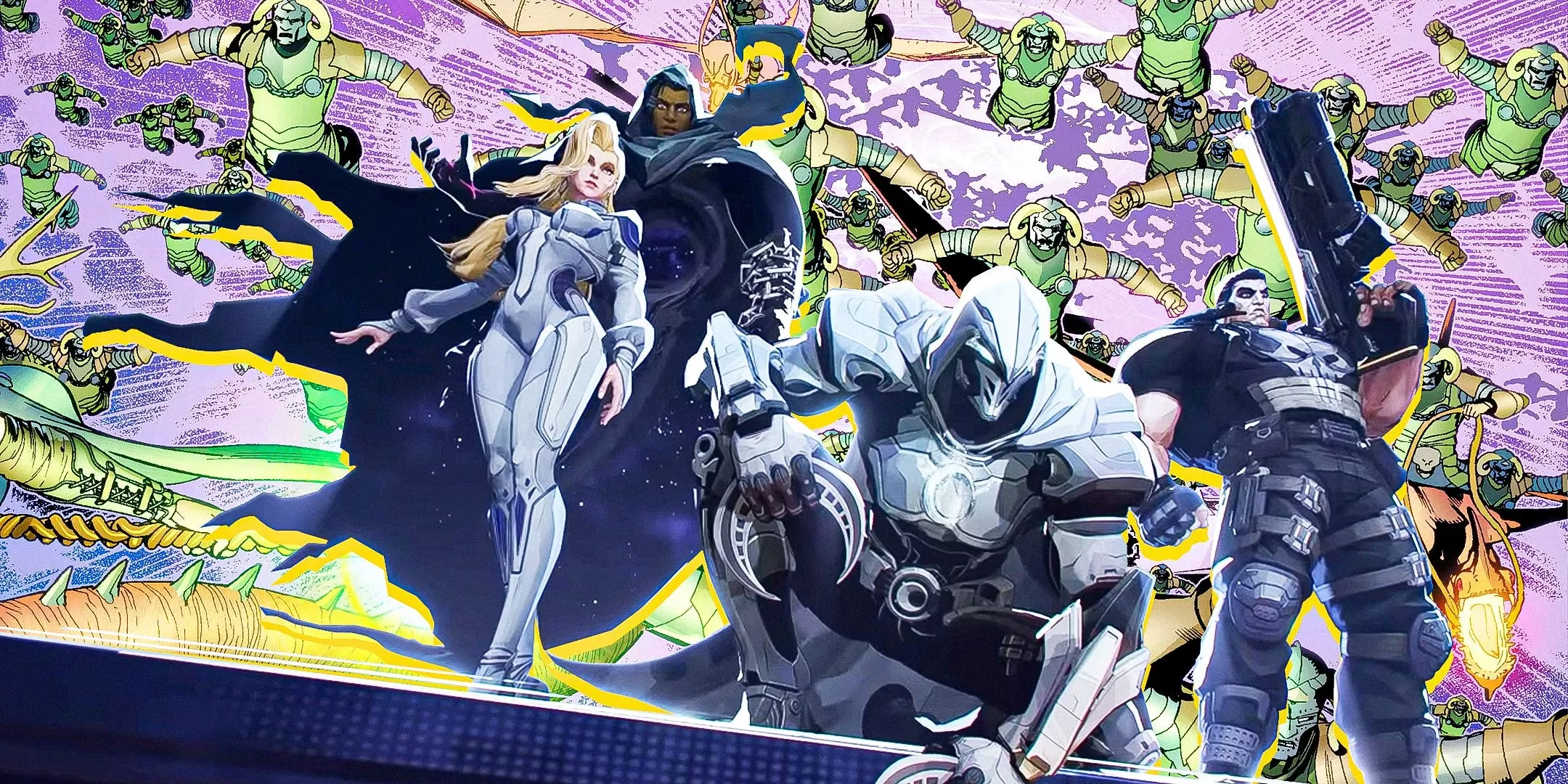
The descent begins innocently. A wanderer, weary from the rigid hierarchies of ranked play, steps into Quick Play—the Wild West where chaos is law and composition is merely a suggestion. Here, the air is thick with the desperate ambition of daily missions and the unbridled joy of a child controlling Spider-Man for the very first time. It is a mode meant for freedom. A place to learn the whisper-quiet footsteps of Psylocke, to master the art of peeling a backline like ripe fruit. The wanderer dives in, heart full of hope, only to be smashed by The Thing’s granite fists, seared by Iron Man’s repulsor glare, and carved by Magik’s soul-steel blade.
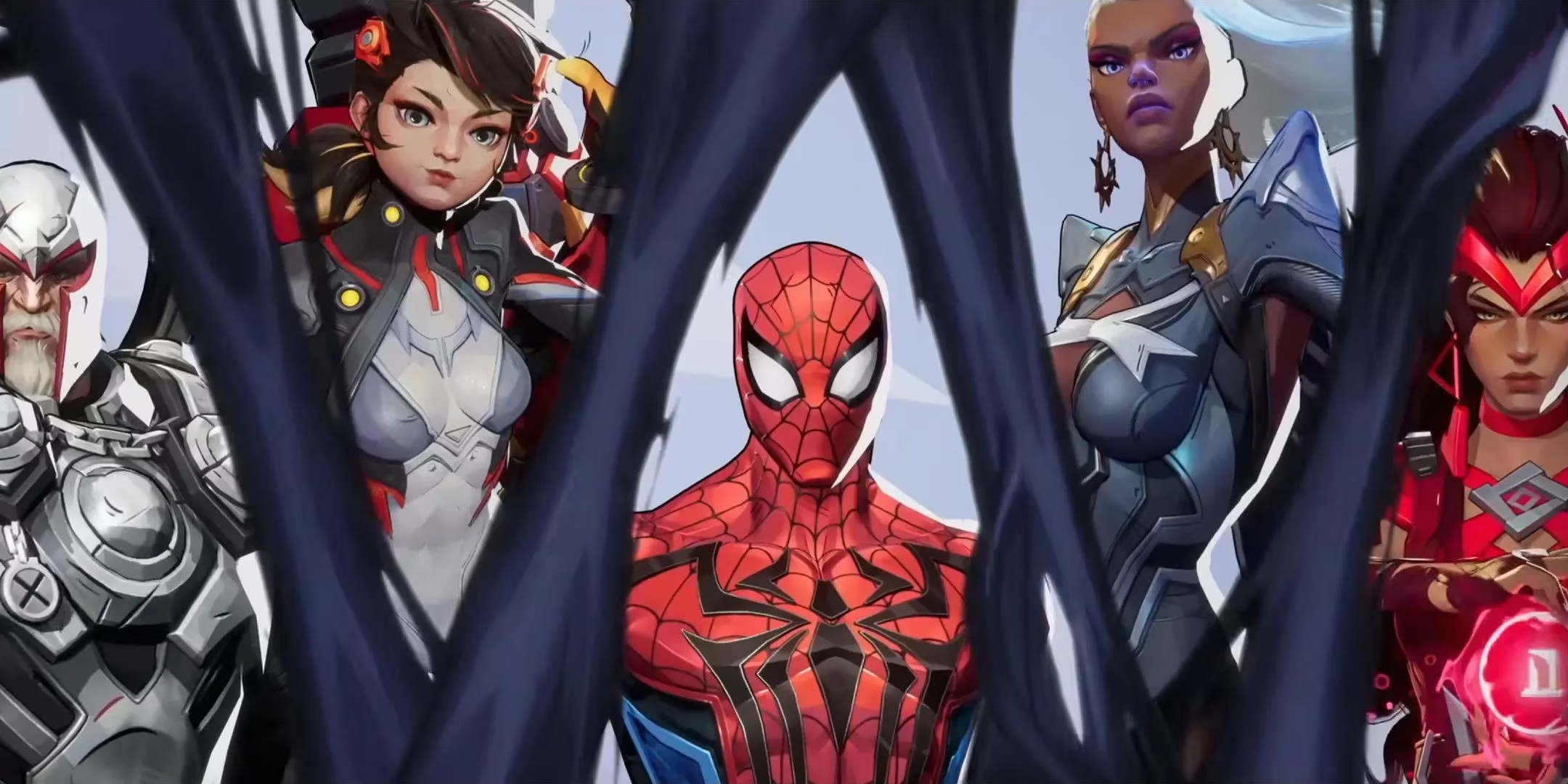
Two losses. That is the threshold of sorrow. After the second defeat breaks against the spirit like a wave against a crumbling cliff, the game takes notice. Not with compassion, but with a clinical, mechanical response. It opens a hidden door. The next queue does not lead to the expected fray of human minds. Instead, it leads to a sterile arena populated by puppets. Bots. Dozens of them, their names crafted to mimic real players, their actions a grotesque pantomime of life. They emote at spawn, they spray graffiti on walls, they jump in repetitive arcs—a chilling theatre performed only for you. This is the bot jail. ⛓️🤖
Here, the wanderer is trapped. Leaving the match confers no escape; the system will only queue another bot lobby, or brand the deserter with a penalty. The only keys to freedom are a hollow victory or the surrender of logging off. The match unfolds like a predetermined tragedy. Human allies—rarely more than two—are often veterans who steamroll the imprisoned bots into their spawn room. The backline, the very reason the wanderer chose Quick Play, never forms. The bots huddle behind walls, their programming incapable of mounting a real assault. There is no dance to learn, no counter to study. There is only the silence of a fight that was never truly alive.
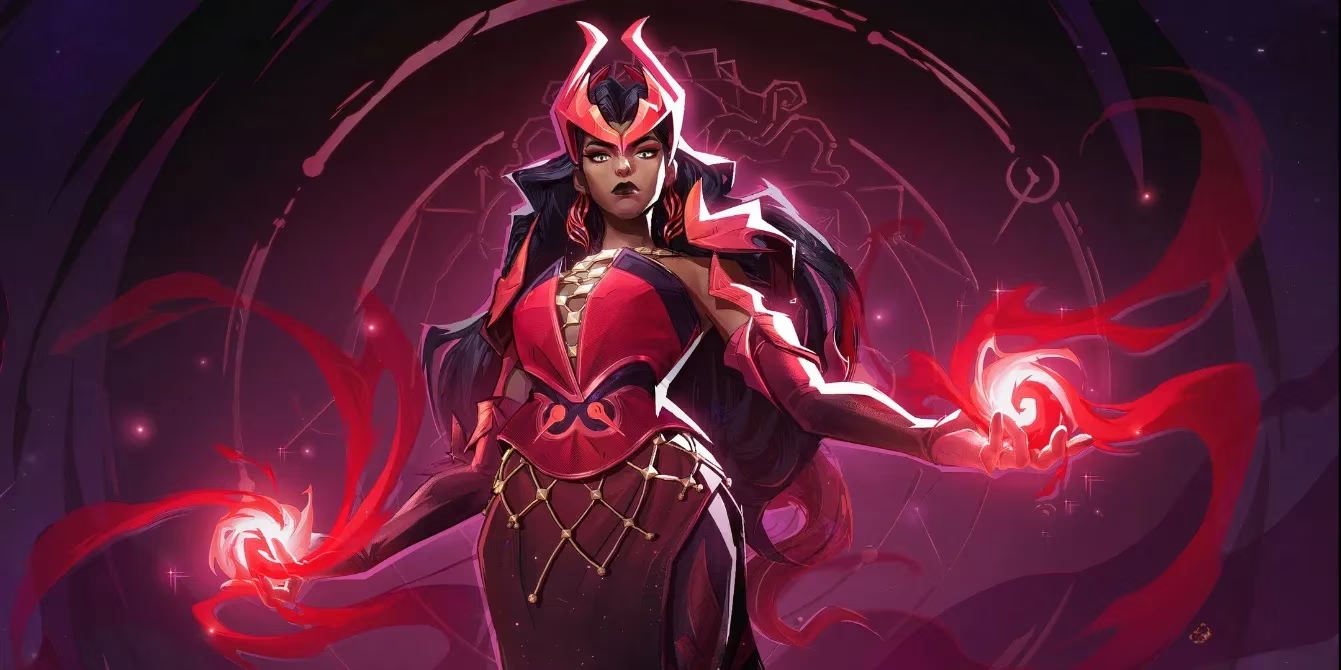
Forced to abandon the delicate knives of Psylocke, the wanderer switches to Scarlet Witch. Her chaos energy becomes a tool not of sport, but of expedience. Thirty eliminations. Zero deaths. Five minutes dissolve into the void, leaving behind only a residue of profound dissatisfaction. The bot match grants no insight, no growth—just a strange, aching emptiness, a feeling of having been cheated out of time itself. And then, when the hollow victory unlocks the cage, the wanderer resumes the experiment, loses twice again, and watches the cycle repeat. Occasionally, fate inserts a final-second backfill into a doomed human match, counting as a loss, which then shoves the player right back into the bot abyss. It is a vicious, soul-draining loop. 🔁
The true cruelty of this design lies in its silent assumption. It suggests that players are fragile creatures who cannot stomach a losing streak, that they must be fed a lie of triumph to remain engaged. Yet, a streak of twenty genuine defeats holds more value than a single bot match. In a real loss, a duelist learns the exact angle a Magik’s portal cuts through their defense. They learn the timing of a Groot wall that separates them from their healers. They learn the relentless focus required to track a diving Venom. Against bots, they learn nothing. The only reward is the intense desire to walk away and never return. Quick Play, the intended proving ground, becomes an unplayable purgatory where real practice is impossible because the entire session becomes a frantic, desperate game of not losing twice.
There already exists a sanctuary for those who wish to test combos or blow off steam: the Practice vs. AI mode. It is a door one chooses to open. But the bot jail is a trapdoor, a forced march into synthetic battlefields. The bots themselves grow ever more unnerving, their mimicry of human behavior—the emote at the spawn door, the erratic target switching—feeling less like a feature and more like the collection of data, a machine learning to wear a human face. The wanderer becomes a specimen, observed through a one-way mirror while the puppets dance.
NetEase, the architects of this beautiful, broken colosseum, hold the key. The plea rises not in anger, but in weary hope: let Quick Play be Wild West, with all its glorious, unfiltered failure. Scrap the forced bot matches, or at the very least, allow the player to opt out of this patronizing prison. Let Psylocke fumble her first hundred dashes against real, unpredictable foes. Let losses pile up like autumn leaves, each one feeding the soil of mastery. The players do not need a sugar-coated lie of glory. They need the raw, unadulterated struggle that makes finally landing that combo—against a living, thinking opponent—a moment of pure, earned poetry.
Until that door is unlocked, the bot jail remains: a quiet, five-minute nightmare where victory tastes like ash, and time itself feels stolen. And somewhere in the depths of Quick Play, another wanderer queues up, heart full of hope, not knowing the trap that awaits them after the second loss. 🌑
Comments