Asian Gaming's New Titans: Korean and Chinese Studios Challenge Japan's Dominance
Explore the seismic shift in premium Asian video games as China and South Korea challenge Japan's long-standing dominance, unleashing a wave of record-breaking, high-fidelity titles like Black Myth: Wukong and Stellar Blade that are redefining global gaming standards.
For decades, the global perception of premium Asian video games began and ended with Japan. Names like Nintendo, Square Enix, and FromSoftware were synonymous with critical acclaim and genre-defining experiences. But as we move deeper into the 2020s, a seismic shift is underway. While Japan remains a powerhouse, the gaming world is now looking east to new contenders: the corporate giants of China and the ambitious studios of South Korea. These developers are no longer content with dominating just the mobile and live-service markets; they're now storming the gates of the premium, single-player arena, armed with massive budgets and global ambitions. The era of Japanese monopoly on 'prestige' Asian gaming is officially over.
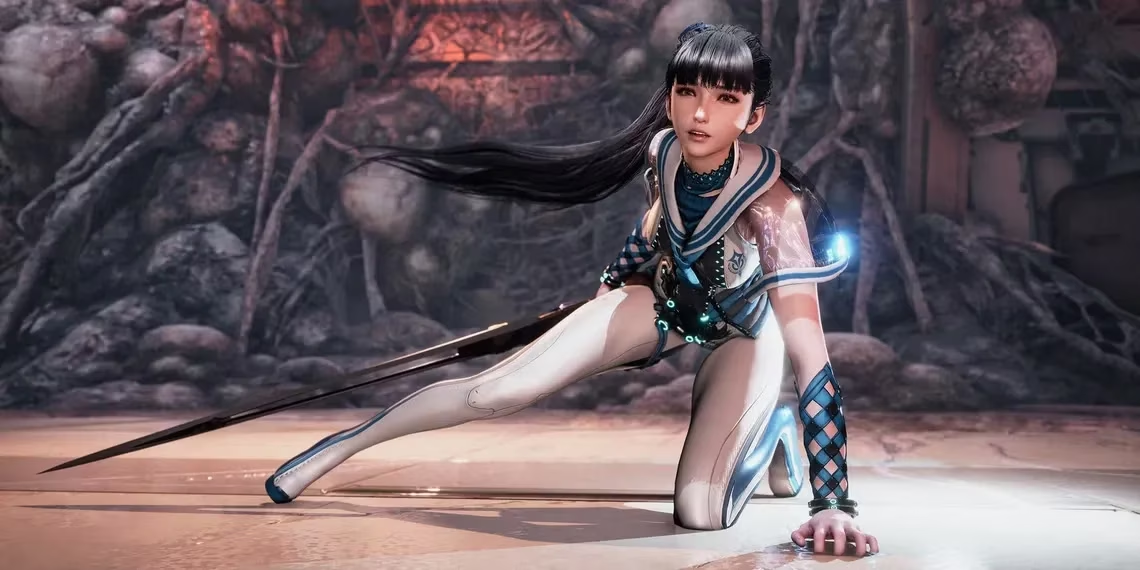
The evidence of this power shift is not subtle; it's plastered across Steam's top-seller lists and breaking sales records. In 2025, the Korean studio Shift Up delivered a masterclass in spectacle with Stellar Blade. Selling over a million copies in its first month, it proved that a Korean-developed, character-action title could not only exist but thrive on the global stage. Its sleek combat and striking visual design were a statement of intent. But that was just the opening salvo.
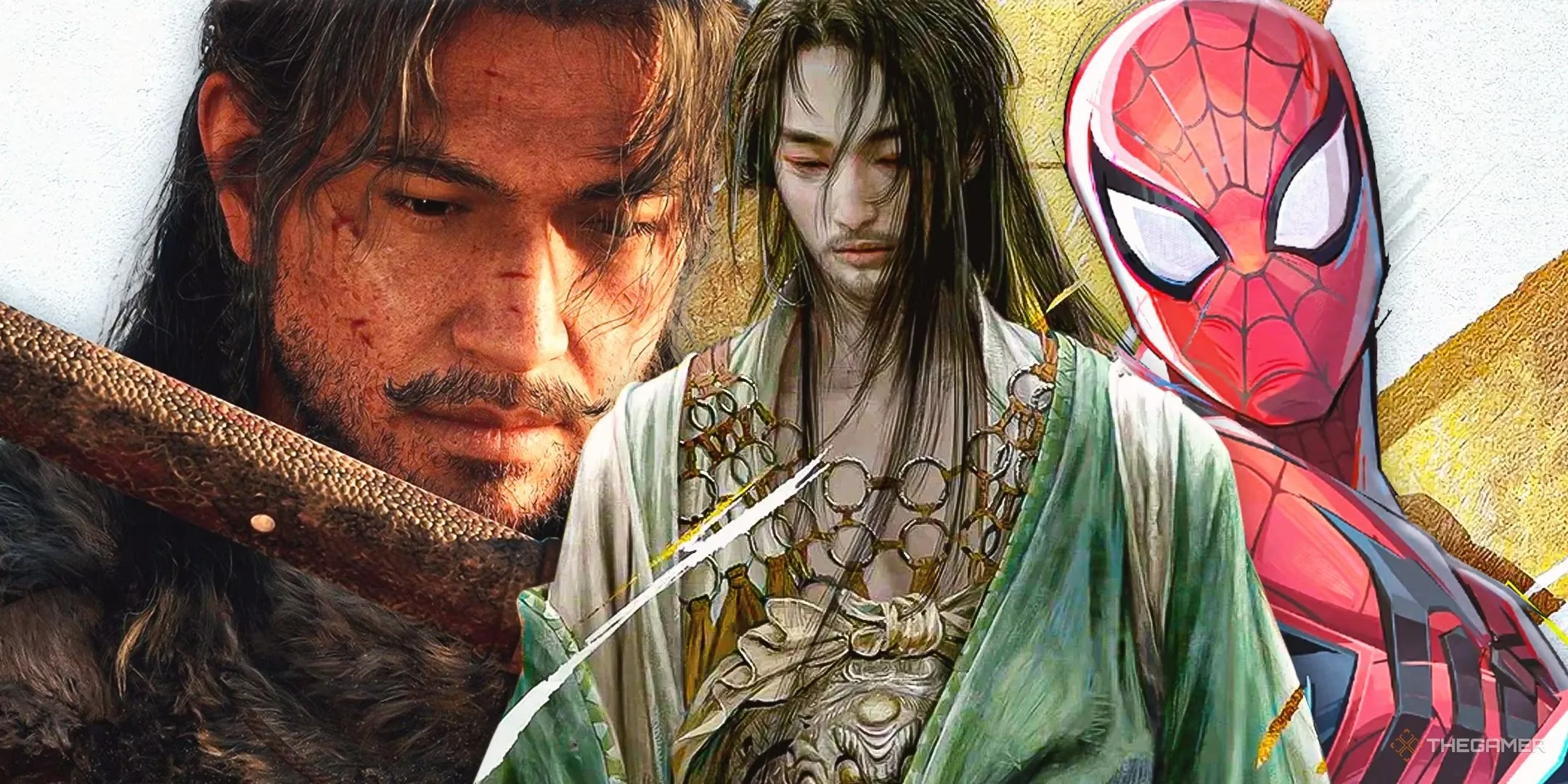
Then came the earthquake: Black Myth: Wukong from China's Game Science. Its launch wasn't just successful; it was historic. The game shattered Steam records for concurrent players in a single-player title, a feat that sent shockwaves through the entire industry. It demonstrated a voracious, worldwide appetite for high-fidelity action RPGs rooted deeply in Chinese folklore. Suddenly, the conversation changed from if Chinese AAA games could succeed to how many would follow.
And follow they have. The pipeline from China is now brimming with premium titles aiming to capitalize on this newfound credibility:
-
Wuchang: Fallen Feathers: A Soulslike adventure set in a twisted version of China's late Qing Dynasty.
-
Lost Soul Aside: A frenetic, high-octane action game that wears its inspirations (Final Fantasy, Devil May Cry) on its sleeve, but with a distinct sci-fi flair.
-
Phantom Blade Zero: A wuxia-infused action RPG blending dark fantasy, horror, and even cyberpunk elements into a uniquely Chinese tapestry.
Orchestrating much of this global charge is NetEase, one of China's publishing behemoths. You might know them from the hero-shooter phenomenon Marvel Rivals, but their portfolio is expanding aggressively into narrative-driven experiences. They're backing ambitious single-player projects like the open-world adventure Where Winds Meet and the recently announced Blood Message. On paper, it's an exciting push for variety. In practice, however, it's sparked a different conversation—one about originality, or the perceived lack thereof.
Let's talk about that NetEase "inspiration." 🧐 Watching the trailer for Blood Message is an exercise in deja vu. A grizzled older warrior? Check. A younger companion, possibly a son? Check. Brutal, weighty melee combat, environmental puzzles, and even zipline traversal? Check, check, and check. The internet wasn't shy in dubbing it "Chinese God of War," with extra notes of Assassin's Creed and Ghost of Tsushima. This comes hot on the heels of Marvel Rivals, which many viewed as NetEase's play to capture the Overwatch audience. The pattern is hard to ignore.
It leads to a prickly question: Are these titans of industry building new classics, or are they expertly crafting AAA comfort food? There's a sense that many of these big-budget Chinese offerings are laser-focused on catering to established Western tastes rather than challenging them. They often feel like a fusion cuisine—taking a proven Western genre template and seasoning it heavily with Asian historical aesthetics, wuxia combat flourishes, and mythological names. It's effective, commercially savvy, but to some critics, it feels deeply derivative, a tacit admission that the safest path to global success is to refine what already works, not to reinvent it.
This critique becomes especially poignant when contrasted with the vibrant indie scene flourishing elsewhere in Asia. Studios across Southeast Asia have been quietly delivering soulful, critically adored games like Coffee Talk, A Space For The Unbound, and Until Then. These games succeed not by mimicking a global blockbuster formula, but by offering hyper-localized stories with universal emotional cores. They prove you can be distinctly, authentically Asian without your primary reference point being a Western AAA title from five years ago.
So, what's the real issue here? Is it a China problem? A NetEase problem? Not really. The triple-A space globally is risk-averse, often retreading familiar ground to secure massive returns. For every groundbreaking Elden Ring, there are a dozen competent but familiar open-world games. NetEase and its peers are simply playing the global AAA game by its established rules—rules written largely by Western studios over the past 15 years.
The true test for these new Asian titans won't be their launch sales—Black Myth: Wukong has already aced that. The test will be what comes next. Can they evolve from being brilliant students of the craft to becoming the masters who define it? Can they leverage their immense resources and deep cultural histories to create experiences that feel definitively theirs, rather than polished homages? The talent and ambition are clearly there. The world is watching, controller in hand, waiting to see if the next decade's gaming legends will be written not just in Japanese, but in Korean and Mandarin too.
Data referenced from Newzoo helps frame why the recent surge of premium Korean and Chinese releases is more than a viral moment: it aligns with broader market realities where global revenue scale and audience growth increasingly justify AAA budgets outside Japan. Seen through that lens, hits like Stellar Blade and Black Myth: Wukong aren’t just standout games—they’re signals that publishers such as NetEase can rationally pursue big, narrative-driven single-player projects for worldwide audiences, even if the safest early strategy is to hew closely to proven Western-style templates while they build brand trust.
Comments